America's housing shortage is bigger than rising rents. When the system cannot produce enough homes, the consequences show up in health, equity, transportation, and economic opportunity.
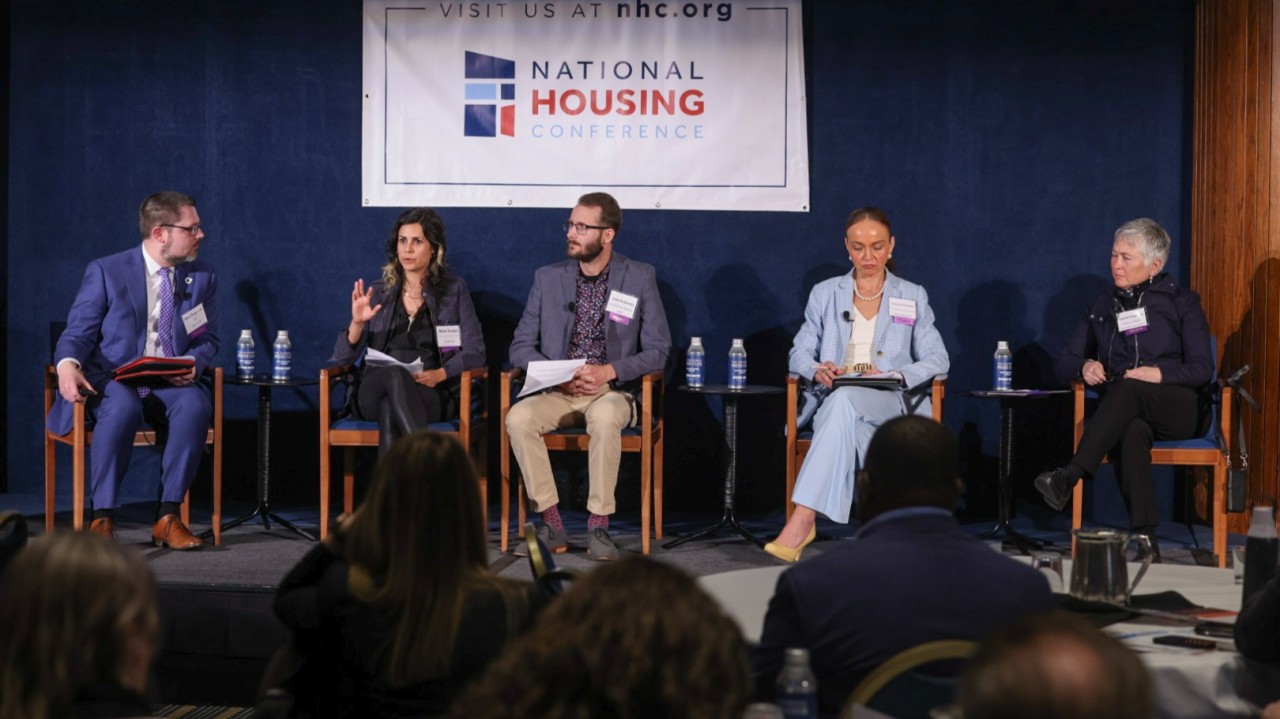
Earlier this week, I moderated a panel at the National Housing Conference's Solutions for Housing Communications with leaders working across healthcare, city government, LGBTQ+ advocacy, and transportation. The discussion returned to a practical point: when the housing system cannot produce enough homes in the right places, the consequences spread well beyond rent.
As I emphasized during the event, housing is foundational. Without stable housing, individuals and communities struggle to thrive. The United States faces a housing shortage estimated by Up for Growth at 3.9 million missing homes. The consequences show up in soaring rents, displacement, longer commutes, rising homelessness, and weaker access to opportunity.
Here is how the production failure shows up across four policy areas we explored during the panel:
Housing is Good Medicine
At first glance, healthcare and housing may seem unrelated. However, as Cynthia Cifuentes, MBA from Kaiser Permanente highlighted, housing stability directly affects health outcomes. "Your health is tied to your wealth," she noted, underscoring housing affordability and quality as central to individual stability.
Families experiencing severe housing burdens often face "impossible choices between paying for diapers, paying for rent, and paying for healthcare."
— Cynthia Cifuentes, Regional Vice President, Public Affairs — Kaiser Permanente
When a family spends 50% or more of their income on rent (as nearly a quarter of renter households do, according to Harvard's Joint Center for Housing Studies), they often have to cut back on nutritious food, delay medical care, or live in substandard conditions. It's no wonder that unstable, unaffordable housing is linked to worse physical and mental health outcomes. In fact, Kaiser's data has found that a person facing severe housing challenges can have a life expectancy up to 17 years shorter than someone in stable housing. Seventeen years — that is a public health emergency hiding in plain sight.
Key Solutions
- Invest directly in affordable homes near transit — as Kaiser Permanente's Maryland Purple Line project demonstrates — to improve community health outcomes.
- Expand supportive housing for chronically homeless individuals, significantly reducing healthcare costs and improving lives.
Homes Where All Are Welcome
Simply building more homes isn't enough, according to Josh Dubensky from SAGE. LGBTQ+ individuals, particularly seniors, need housing where they feel safe and welcome. Discriminatory practices and restrictive zoning in LGBTQ+-friendly neighborhoods often force individuals into less accepting communities, exacerbating vulnerabilities.
While the affordability crisis is a huge problem for the LGBTQ plus community, that's only part of the issue. If you only focus on making housing affordable, but not focusing on making sure that everyone feels safe and affirming and great getting that housing, you're only going to get half of the problem.
— Josh Dubensky, Manager of Housing Policy, SAGE
Expanding the overall supply of housing, particularly in inclusive, walkable neighborhoods within major cities, can directly address some of the unique vulnerabilities experienced by LGBTQ+ populations. Research shows that cities with vibrant LGBTQ+ communities often have restrictive zoning laws that severely limit housing availability. This drives up prices and pushes LGBTQ+ residents out of neighborhoods known for their safety and acceptance. By eliminating exclusionary zoning practices and proactively increasing the supply of homes in inclusive urban areas, we can significantly reduce these structural barriers, helping ensure that LGBTQ+ individuals have access to housing that is both affordable and affirming.
An abundant and inclusive housing system ensures that new developments actively incorporate the needs and safety concerns of marginalized communities. Ultimately, the goal is not just to build more homes but to ensure that communities explicitly prioritize accessibility and inclusivity for every individual, regardless of sexual orientation or gender identity.
Key Solutions
- Eliminate exclusionary zoning and land-use barriers in inclusive neighborhoods to encourage diverse, welcoming homes.
- Strengthen fair housing enforcement and explicitly target discrimination by funding LGBTQ+-affirming housing projects and anti-discrimination policies.
Grow Communities, Not Displacement
On the panel, we also delved into the complex dynamics of gentrification and displacement. As cities grow and change, simply building more housing isn't a silver bullet if longtime residents are being pushed out in the process. Our representative from the City of Austin, Marla Torrado, PhD, leads a Displacement Prevention division that was created specifically to tackle this issue. She noted that Austin established this team in 2019 after a pivotal University of Texas study showed how rapid neighborhood change was impacting vulnerable residents. Housing policy must therefore incorporate intentional anti-displacement measures and cross-sector collaboration, ensuring new development benefits everyone.
This is not just about building housing. There's so much that goes into displacement and gentrification… people feel pressure to move out.
— Marla Torrado, PhD, Housing Division Manager, City of Austin
At the same time, increasing the overall housing supply remains essential. Chronic underproduction drives scarcity, escalating housing prices and intensifying displacement pressures. Adding more units — especially affordable and mixed-income options — can ease these pressures. Equitable development means pairing new homes with affordability, tenant protections, and genuine community engagement. As Dr. Torrado emphasized, inclusive planning across land use, transit, and community resources ensures investment benefits all residents, creating vibrant mixed-income neighborhoods rather than displacing longtime community members.
Key Solutions
- Scale anti-displacement programs like Austin's $300 million Project Connect initiative, preserving affordable homes, funding critical repairs, providing tax relief, and empowering community-led planning.
- Replicate proven anti-displacement strategies nationwide, including "right-to-return" policies and community land trusts to secure long-term affordability.
Bringing Homes, Jobs, and Transit Together
Finally, no discussion of housing's broader consequences is complete without examining its relationship to transportation and economic opportunity. Research from the Center for Neighborhood Technology has noted that housing and transportation are the two largest expenses for most households, often consuming over half of a family's budget combined. Our panelist from the World Resources Institute and the New Urban Mobility Alliance, Harriet Tregoning, put it bluntly, highlighting the "drive-till-you-qualify" trap: families move farther out to find cheaper housing, but then end up paying more in transportation costs and time lost to commuting.
Housing and transportation are the two biggest costs in every household. It's not really great if we find somebody an affordable home at the edge of the region far away from jobs and daily needs, because… a new car is almost $50,000 a vehicle. It's really not sustainable for families.
— Harriet Tregoning, World Resources Institute and New Urban Mobility Alliance
The solution is to build housing in the right places. That means more homes near jobs, transit lines, town centers, and amenities — often termed transit-oriented development (TOD) or simply locating housing in high-opportunity, walkable areas. When we create affordable housing in transit-rich, job-rich neighborhoods, we tackle multiple problems at once: we reduce commute times, cut transportation costs for families, lower vehicle emissions, and connect lower-income households much better access to good jobs, schools, and services.
Key Solutions
- Prioritize transit-oriented development (TOD) by locating affordable housing near transit, jobs, and essential services to reduce commuting, lower household costs, and shrink carbon footprints.
- Activate state DOTs and transit authorities to use surplus public land for affordable housing developments — following examples like Sound Transit's partnership with BRIDGE Housing.
A Future Where Housing is Always an Opportunity, Never an Obstacle
When I reflect on this panel, I'm struck by the alignment across such different sectors. As we discussed in this panel, solving the shortage requires an all-hands-on-deck approach. Imagine healthier communities, resilient local economies, vibrant cultures, and greener cities — this is what the pro-housing movement can deliver.
The consensus is clear: America's housing shortage is connected to almost every major challenge we face. By solving it, we create healthier communities, resilient local economies, vibrant cultures, and greener cities.
Now, let's act. Leaders from every sector — health, education, business, civil rights — must unite behind bold housing policies. Let's break down barriers and build the homes we need. Safe, affordable housing isn't just possible; it's essential. Our shared future depends on it.